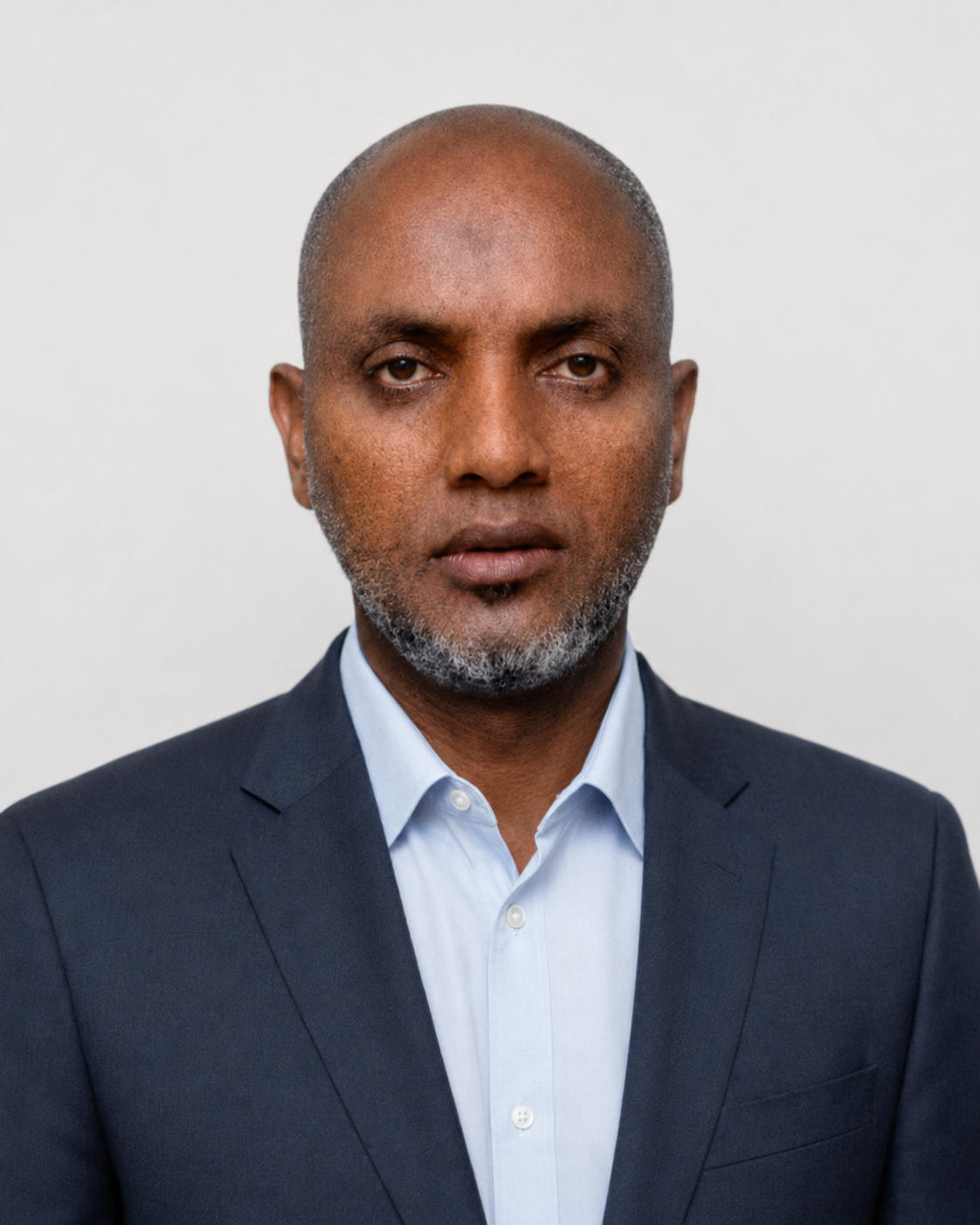
Irrigation, Dams and Water Resources
Eng. Seid Shimelis is an accomplished irrigation and water-resources engineer whose professional journey spans nearly three decades of engineering design, water-resources development, project management and technical leadership.
His career represents a progression from a young irrigation engineer engaged in field investigation and detailed engineering design to a senior professional entrusted with the management and coordination of major irrigation, drainage, dam and water-resources infrastructure programmes.
An important formative chapter in this journey reaches back to 1995 and the HARE Irrigation Project at the Arba Minch Water Technology Institute, where he worked with Mesfin Tewolde, Mitiku Bedru and Tamir Mitiku on a complete irrigation-project design.
Building the Technical Foundation
Eng. Seid built a strong academic foundation in irrigation engineering, obtaining a BSc in Irrigation Engineering and later an MSc in Water Resource and Irrigation Engineering from Arba Minch University.
His professional development was strengthened through specialized training in project analysis, FIDIC Conditions of Contract, finance for non-finance managers, leadership, and technical and project-management software including AutoCAD, MS Project, Microsoft Office and Visual Basic.
Water Resources, Reconnaissance and Detailed Design
Beginning with the Commission for Sustainable Agriculture and Environmental Rehabilitation in Amhara Region (CO-SAERAR), Eng. Seid participated in identification of water resources, reconnaissance surveys, field-data collection and detailed engineering design of small-scale irrigation schemes.
His work included Zana and Gomit micro-earth dam irrigation schemes; Uwa and Telalak diversion irrigation projects; Gota and Gumara diversion schemes; Megech Diversion Irrigation Project; and Zarima Intake Irrigation Project. He also assumed team-leadership responsibilities, coordinating multidisciplinary groups of engineering and sector specialists.
This period required understanding of the entire irrigation-development process—from watershed and water-resource identification through field investigation, hydraulic and structural design, drawings, bills of quantities, cost estimation and multidisciplinary coordination.
From Diversion Weirs to Complete Irrigation Systems
While serving with the Amhara Region Water Resource Development Bureau, Eng. Seid undertook irrigation studies and designs from reconnaissance through detailed engineering and worked as both an engineer and multidisciplinary team leader.
The Megech Diversion Irrigation Project illustrates the technical foundation behind his later leadership career. As Design Engineer and Team Leader, he was responsible for reconnaissance, field-data collection and hydraulic and structural design of diversion headworks, including the diversion weir and intake.
His responsibilities extended through preparation of detailed-design reports, working drawings and engineering cost estimates, linking field investigation directly to practical hydraulic and structural design.
Ziway, Raya, Kesem–Bolhamo and Omo Valley
At Water Works Design & Supervision Enterprise (WWDSE), Eng. Seid served as Project Manager for the Ziway and Raya Pressurized Irrigation Projects. The Ziway scheme covered approximately 3,000 hectares, while the Raya project covered approximately 18,000 hectares and incorporated groundwater-fed pressurized systems together with surface irrigation around the Waja springs.
His experience also included feasibility study and design work for the Kebabo and Angereb Pressurized Irrigation Projects, involving water-resource assessment, irrigation-method selection, system design, bills of quantities, cost estimation and construction scheduling.
He subsequently managed the Kesem–Bolhamo Sugar Development Expansion Irrigation Project in the Afar Region, involving approximately 10,000 hectares, and later the Omo Valley Farms Irrigation Project in South Omo, covering approximately 6,000 hectares of gross irrigable land.
From Design Engineer to Senior Engineering Management
Parallel with his project responsibilities, Eng. Seid moved steadily into institutional and technical leadership. He served in managerial positions covering water-resources infrastructure development design, headworks design, surveying and mapping, irrigation and drainage.
His responsibilities included planning and supervising professional teams, mobilizing personnel, overseeing technical proposals and contract management, evaluating performance and ensuring timely delivery of engineering outputs.
His professional record reflects a career that has moved from detailed design of individual diversion works and small-scale schemes to the management and coordination of irrigation developments extending across thousands of hectares.
Integrated Irrigation and Water-Infrastructure Delivery
Eng. Seid's experience integrates water-resources assessment, reconnaissance, feasibility studies, detailed irrigation and drainage design, dam and headworks engineering, pressurized and gravity irrigation, project management, construction supervision and contract administration.
This breadth allows him to connect the technical details of hydraulic structures with the larger requirements of project planning, multidisciplinary coordination, cost control, tender documentation and engineering leadership.
From the HARE Design Table to Major Water Infrastructure
What makes Eng. Seid's professional story particularly meaningful in the context of HARE is the continuity between its beginning and what followed. The young engineer who participated in the project in 1995 went on to spend his professional life addressing many of the same fundamental challenges on a far greater scale.
He continued assessing water resources, designing diversion and storage structures, developing irrigation and drainage networks, managing pressurized and gravity systems, coordinating multidisciplinary engineering teams and leading the delivery of major water infrastructure.
Seen from the perspective of more than three decades, the HARE Irrigation Project was therefore not simply an academic exercise. It formed part of the professional foundation of engineers who would later contribute extensively to Ethiopia's water-resources and irrigation-development sector.
The questions confronting the young HARE team—how water should be assessed, conveyed, controlled and applied productively to agricultural land—remained at the centre of Seid's professional life for decades.